
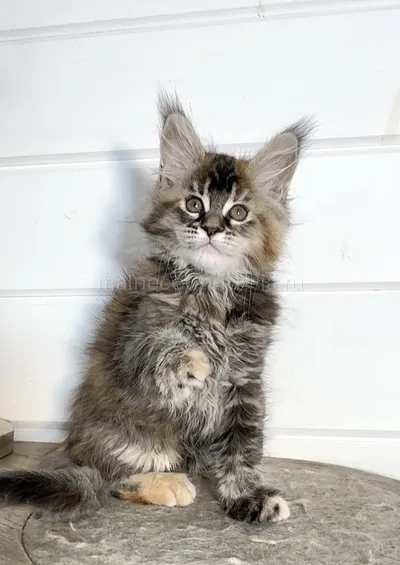
Among Maine Coon lovers there is a special kind of cat that is impossible to look at without smiling — the polydactyl Maine Coon. These cats have more toes than usual, which makes their paws look large and wide, as if the cat were wearing soft mittens. People often simply call them "the cat with big paws". In this article we honestly and thoroughly explain what polydactylism in Maine Coons is, where it came from, whether it is dangerous to health, and how to choose a polydactyl kitten from a cattery.
What polydactylism in Maine Coons means
Polydactylism (from the Greek "poly" — many and "daktylos" — finger) means having extra toes. A normal cat has 18 toes: five on each front paw and four on each back paw. A polydactyl Maine Coon can have more — sometimes six, seven or even more toes on a single paw. Extra toes most often appear on the front paws.
It looks utterly charming, and breeders and owners use affectionate nicknames for it:
- "Mittens" — when the extra "thumb" toe sticks out to the side and the paw looks like a hand in a mitten;
- "Snowshoes" — when the toes widen the paw so it becomes large and flat, just like a real snowshoe;
- "The cat with big paws" — the most popular everyday name, and the phrase people most often search for.
It is important to understand that the extra toes of a polydactyl are fully formed, with proper pads and claws. This is not a deformity or fused toes — it is a neat, symmetrical and harmonious paw, simply a little bigger than usual.
History: Hemingway cats and ship's rat-catchers
Polydactylism is an ancient and inseparable part of Maine Coon history. The breed took shape in the north-east of the USA, in the port towns of Maine, where cats lived on ships and in barns. It is believed that polydactyl cats were prized by sailors: wide "snowshoe paws" helped the cats keep their balance on a rolling deck and hunt rats in the holds more effectively. So polydactyl ship's rat-catchers spread through the ports, and the dominant polydactyly gene naturally became established in the Maine Coon population.
A separate chapter of this story is tied to the writer Ernest Hemingway. A ship's captain gave him a polydactyl cat, and the descendants of that cat still live at the Hemingway Home and Museum in Key West, Florida. That is why polydactyl cats all over the world are affectionately called "Hemingway cats". For the Maine Coon, extra toes are not a passing fashion but a living memory of its seafaring past.
Genetics: the dominant Pd gene — not a disease, not a defect
Polydactylism in Maine Coons is caused by a dominant gene, Pd (polydactyly). Dominant means that inheriting it from just one parent is enough for a kitten to be born with extra toes. If even one parent is polydactyl, roughly half of the litter will usually have "mittens" too.
The most important thing for a future owner to know: polydactylism is NOT a disease, NOT a defect and NOT a deformity. This is the so-called benign (preaxial) form of polydactylism, which is not linked to any health problems. The extra toes of a polydactyl Maine Coon:
- cause the cat no pain or discomfort;
- do not affect its gait, mobility or agility;
- are not associated with heart, muscle or skeletal conditions;
- do not shorten its lifespan.
A polydactyl Maine Coon lives just as long and just as actively as an ordinary one — 12–16 years with good care. There is no reason to fear the extra toes: it is simply a beautiful feature of the breed, not a cause for concern.
Breed recognition and shows: the honest picture
Here it is important to be honest with the buyer. In most classic feline registries (TICA, WCF, FIFe), polydactylism is a disqualifying trait in the standard Maine Coon show classes. In other words, a polydactyl will not be allowed onto the ring to compete against ordinary Maine Coons for a champion title in the main category. This is not because something is wrong with the cat, but because the classic breed standard describes a cat with the usual number of toes.
That does not mean polydactyls are outlaws. TICA recognises a separate experimental breed category, "Maine Coon Polydactyl" — multi-toed Maine Coons have their own dedicated programme and classes. There are clubs and breeders who deliberately and responsibly work with polydactyls, preserving this historic feature of the breed.
The takeaway is simple: if you dream of major show titles in the classic category, a polydactyl is not the cat for that. But if you are looking for a beautiful, healthy and unusual companion, or you are specifically interested in polydactyl lines, it is a wonderful choice.
Why polydactyls are so loved
Demand for polydactyl Maine Coons grows year by year, for several reasons:
- A unique look. Big "mitten" paws combined with the already impressive size of a Maine Coon make a polydactyl a truly striking little "house lynx".
- Living history. Many people want a cat with that "seafaring" heritage — a Hemingway polydactyl is both fascinating and endearing.
- Rarity. Polydactyls are fewer in number than ordinary Maine Coons, so such a kitten always attracts attention.
And most importantly: a Maine Coon's character does not change because of the extra toes. A polydactyl is the same affectionate, devoted, intelligent and friendly "gentle giant". These cats bond just as strongly with their owners, get on with children and other animals, "chirp" instead of meowing and adore being near people. The extra toes only add outward charm — the soul of a polydactyl is one hundred percent Maine Coon.
Caring for a polydactyl's paws: it's all about the claws
Caring for a multi-toed Maine Coon is almost no different from caring for an ordinary one. The only nuance is the extra claws. Because there are more toes, there are more claws, and the sticking-out "thumb" claw on a mitten paw sometimes does not wear down on the scratching post as actively as the others.
- Regularly check all the toes, including the extra ones — especially the "thumb" claw, which can grow unnoticed.
- Trim the claws every 2–3 weeks, cutting only the clear tip and avoiding the pink quick. A polydactyl simply has a few more claws — trimming takes a minute longer.
- Provide a sturdy scratching post of at least 80 cm — the same as for any Maine Coon.
- Make sure the extra claw does not curl into the pad — with timely trimming this never becomes a problem.
Everything else is ordinary Maine Coon care: brushing the coat 2–3 times a week, checking the ears and eyes, cleaning the teeth and feeding a quality super-premium diet.
How to choose and buy a polydactyl Maine Coon kitten
If you have decided to buy a polydactyl Maine Coon kitten, approach the choice as responsibly as you would with an ordinary Maine Coon — and in some respects even more carefully. What to look for:
- Documents and pedigree. A pedigreed polydactyl is a full Maine Coon with registration papers and a pedigree, not a "backyard" multi-toed cat. Ask the breeder about the origin and lines.
- Parents' genetic tests. Health comes first: a responsible cattery tests its breeding cats for HCM (a heart condition), SMA and PKDef. Polydactylism is unrelated to these tests, but they must still be checked.
- Symmetry and paw quality. A good polydactyl has neat, well-formed extra toes with proper pads and claws, without fused or deformed toes.
- Age and socialisation. A kitten leaves for its new home no earlier than 3 months old, vaccinated and litter- and scratching-post-trained.
- Living conditions. Ask to see the parents and the place where the kittens are raised.
Why buy a kitten from a cattery rather than privately. Only a cattery will give you a healthy kitten with proven genetics, documents, vaccinations and honest information about its features. Ads offering a "free polydactyl" or one suspiciously cheap almost always mean a crossbreed with no tests and no health guarantees. Polydactylism is a lovely trait, but a cat should be chosen for its health and character, not just for the extra toes.
Looking for a Maine Coon? Meet our kittens
A Maine Coon — whether a classic beauty or an unusual polydactyl — is a loyal, affectionate and incredibly beautiful friend for 15–20 years. If you have fallen in love with the breed, start by choosing a healthy kitten from trusted breeders.
Take a look at our catalogue of Maine Coon kittens — each one lists its colour, sex, price and the results of the parents' genetic tests. And if you are specifically interested in a polydactyl kitten with big paws, get in touch — we will tell you whether such kittens are currently available or expected in upcoming litters, and help you find your perfect Maine Coon. Read more about the breed on the cattery's home page.
Buy a Maine Coon kitten in your city
Moscow (47) · Krasnodar (9) · Ekaterinburg (6) · Rostov-on-Don (4) · Novosibirsk (2) · Perm (2) · Yaroslavl (2) · Belgorod (1) · Kursk (1)
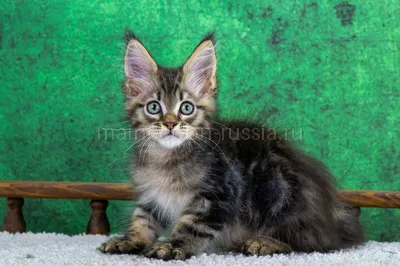
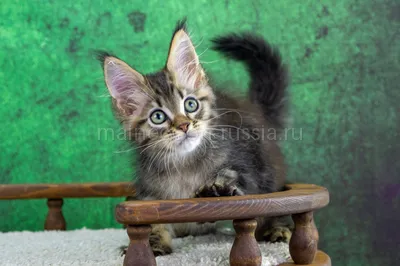
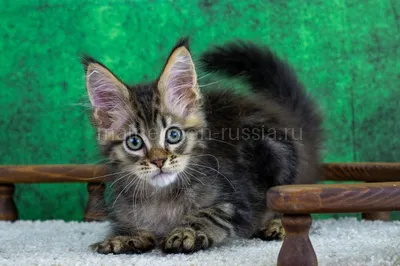
Pet 660$
Breeding not available
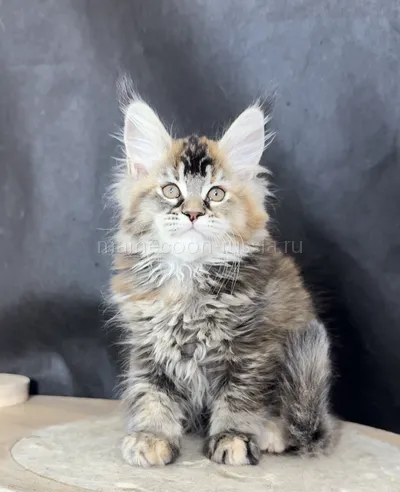
Pet 1 130$
Breeding 2 380$
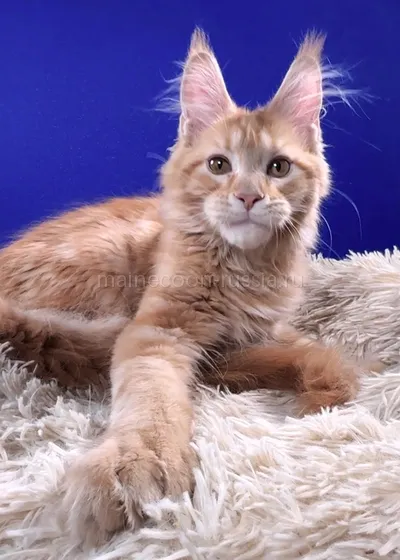
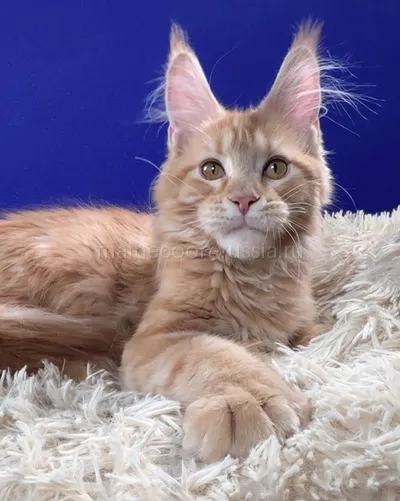
Pet 830$
Breeding 2 060$