


Good day, I am administrator of mainecoon site and owner of the 'Enter' cattery - my name is Mikhail
The site " Maine Coon Russia " was created in order to help catteryattach kittens in good hands - in Russia and not only. Kittens from catteries have documents (pedigrees or metrics), HCM tests (if no, we can order). When choosing kittens, we advise you to pay attention to parents, especially dad. Almost every kitten has a video. For all questions, write to me by mail or by phone number
Training
Kittens are transferred socialized, litter- and scratching-post-trained
Pedigree
Full document packages: passport, metric, pedigree, contract
Health
Under constant veterinary supervision, full vaccination course
Delivery
Professional and safe delivery all over Russia and abroad
About mainecoons
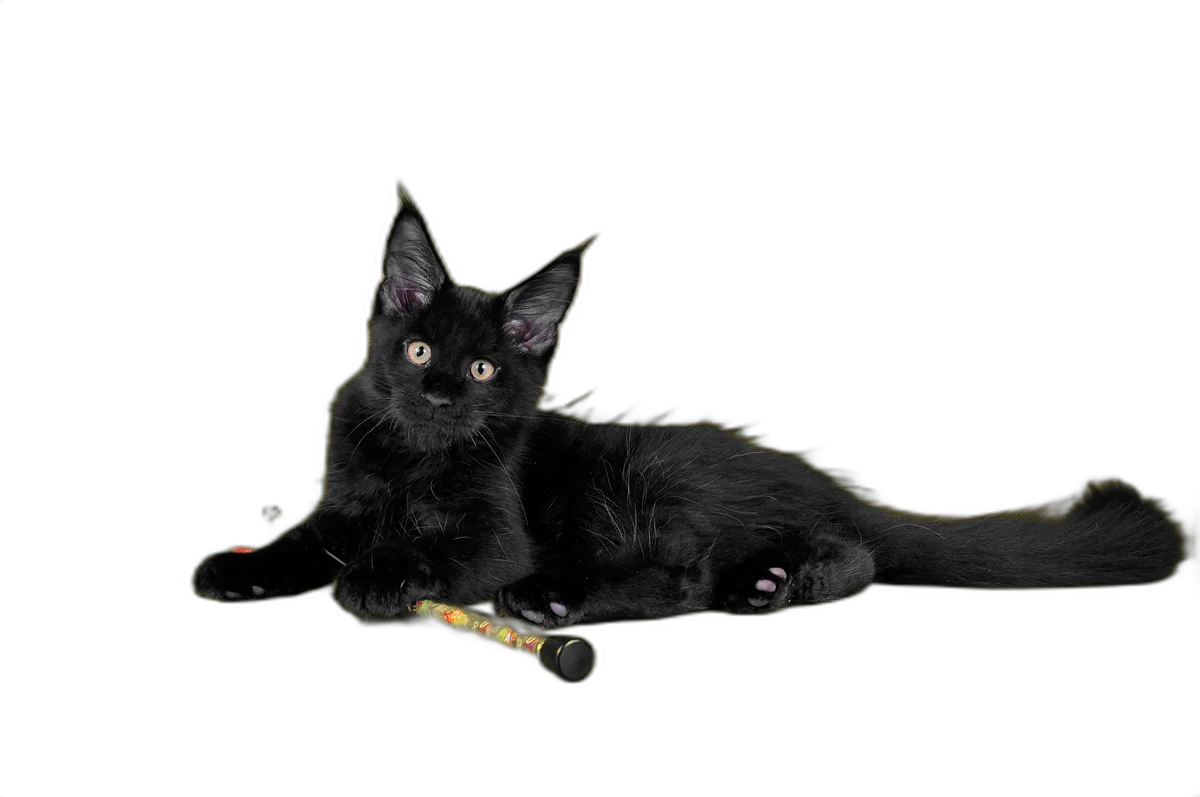
The Maine Coon is the largest domestic cat breed: adult males weigh 8–12 kg, females 4–7 kg, and they keep growing for three to four years. They are calm, attached cats that follow their owner around the flat and prefer being next to you rather than on your lap.
A Maine Coon's voice is quiet and unusual: instead of the usual meow you get chirps and trills. Silent it is not, though — it talks to its owner, just softly.
Features of the breed.
The coat is long but less demanding than it looks: brush once a week, more often when moulting. Mats form where the fur rubs — behind the ears, under the legs, on the britches; leave them too long and they have to be cut out.
Every cat sharpens its claws, and the Maine Coon is no exception. The difference is size: a cat nearly a metre long needs a scratching post it can stretch out on, otherwise it picks whatever matches its height — the sofa or the door frame. Maine Coons usually get on with children and other animals: the breed is not a quarrelsome one, and their size makes them tolerant of fuss. That is the breed in general, not a guarantee for one particular kitten — temperament depends on the parents and on how the kitten was raised in its first months.
Maine Coons live 12–15 years on average. Three inherited conditions are tested for in the breed: HCM (a heart disease), SMA and PKDef. The tests are done on the parents, and a breeder will show you the results on request — that is the first thing worth asking for.
What you will need at home: an oversized litter tray (a cat outgrows the usual one within six months), a full-height scratching post, raised bowls and a high spot — Maine Coons like to watch from above.
A big cat also needs decent food and space: it will fit in a one-room flat, but the tray, the scratching post and the bed will take up a noticeable part of it. Worth counting before the purchase, not after.
And the main thing: the breed is proven by documents, not by looks. A fluffy big kitten without registration papers is simply a kitten.
FAQ
Purchase
2 questions
Adaptation
2 questions
Care
5 questions
Meal
1 question
Home
3 questions
Safety
1 question
At what age is it best to get a kitten?
After all vaccinations are complete, usually no earlier than 3 months of age.
Which has the better temperament — a boy or a girl?
In my experience females are more interesting to watch, while males tend to be more laid-back about many things. It is fascinating to observe Maine Coons, but every cat is an individual.
What should you pay particular attention to when choosing a kitten?
First and foremost, pay attention to health and the presence of documents. A kitten inherits its looks and temperament from its parents. Look at how the parent cats are kept. If the sire sprays, the kitten almost certainly will too.
What should you receive together with the kitten?
The breeder must give you a veterinary passport, a sale contract, and either a registration certificate (metrika) or a pedigree. The registration certificate is issued by the cat club when the litter is registered, which confirms the kitten did not come off the street. The certificate is later exchanged for a pedigree (if you plan to attend shows) — either straight away or after the cat has been neutered/spayed.
1. What difficulties can arise when moving to a new home?
It all depends on the individual kitten's character. Any move is stressful, so set the kitten up with water, food and a litter tray in a single room and don't let it roam anywhere else for a day or two. Socialising the kitten is the breeder's job. A kitten usually adapts quickly — males especially — and soon starts running everywhere and exploring.
If on arrival the kitten hides under the sofa and won't come out, you won't win its trust by dragging it out. It will come out in its own time and come to get to know you. Be patient and respect your Maine Coon!
Which carrier should I get?
Choose one allowing for the fact that your animal will grow. If the animal will be travelling by air, carriers have specific requirements — familiarise yourself with them.
How do you correctly discipline a cat?
Use a spray bottle or a verbal scolding. Never hit the cat — you will only provoke aggression and a reluctance to come to you for cuddles.
How do you teach a cat its name?
Call the cat by name when you feed it; it will get used to it and learn that you are calling it specifically.
How can you tell the cat wants affection?
It will come to you on its own, kneading you and looking up into your face.
How can you tell the cat does NOT want to be held?
It will struggle to break free, persistently, like a tank.
How do you show the kitten where its litter tray is?
When you collect the kitten, take a little of the breeder's litter, and buy the same fresh litter and a tray at the pet shop. The kitten will easily find its tray by scent. Later you can switch it to a different litter or even train it to use the toilet.
How do you stop a cat soiling in the wrong places?
Make it clear to the kitten that this is not allowed. Never hit it! At most, give it a light spray of water in the face from a spray bottle. Treat the spot it soiled with a hydrogen-peroxide solution and baking soda. Bleach, on the contrary, will draw the animal back to that spot.
How often should you bathe a kitten?
No more than once a month, and ideally only when it gets very dirty.
Which shampoo should I buy?
Any shampoo from a pet shop will do. If you are preparing for a show you can use a professional groomer, since professional shampoos are expensive — and you'll know whether you'll actually be attending shows after your very first one.
How often should you trim the claws?
Usually once a week. Some people don't trim them at all. The main thing is to have a good scratching post.
How often do you clean the ears?
As they get dirty — roughly once a year.
How often should you comb a Maine Coon?
Once a week is enough. Use an ordinary comb — never a slicker/de-shedding brush! You can buy a FURminator. If your pet attends shows, use it very carefully.
Will there be fur all over the flat?
If you comb the cat regularly, you won't have that problem.
The scratching posts look identical but cost different amounts in different shops.
It all comes down to the material. Some are covered with carpet, others with jute twine and sisal. The difference is in durability. A cheap one you'll be replacing in a couple of months.
Which price range should I buy?
Buy a few different ones and see which your pet prefers.
How do you choose litter?
There is a huge variety of litters today. The best value for money are wood-based and clay (clumping) litters. You can also toilet-train a kitten — special training kits exist. Telling whether the litter suits the kitten is easy: no puddles around the house.
How do you feed a kitten?
For the first month, the same as at the breeder's; after that you can choose something different.
When can you switch to adult food?
After one year of age.
What should you feed and treat an adult Maine Coon with?
Dry food should always be freely available — choose super-premium or holistic brands. Remember that dry food loses its freshness, so never put out more than a daily portion in the bowl. The diet should include meat (frozen beef); you can also give kefir, quail eggs with cream, and fresh cottage cheese.
Your Maine Coon may beg for something from the table — don't refuse it, but don't make such treats a regular part of its diet either.
Do I need to keep cables, chargers and extension leads away from the kitten?
Absolutely. As it grows up it will lose interest, but while it's little it will poke its curious nose everywhere.
And what about the curtains?
Scold it when it tries to climb them. You can hiss or spray a little water in its face. If you have a cat tree where the kitten can climb freely, it won't pay the curtains any attention.
Boxes, gaps and hard-to-reach places.
Put boxes away and make gaps and tight spots inaccessible — both for the kitten and for yourself. Safety above all. You don't want to injure your little kitten, do you?
Why do cat trees vary so much in price, and do you really need one?
Yes, you do need one. A small one is fine. Remember: if the cat is happy with its own things, it won't touch your favourite sofa or other furniture! Prices vary with the size and quality of the units. You can always build one yourself — the internet is full of examples! This is especially worth noting for anyone getting a cat for breeding.
When the cat is on its tree, is it better not to disturb it?
No — it's better to handle it! The more you play with, pick up, stroke and talk to your Maine Coon, the better! The cat must clearly understand that the scratching post is the place where it may play and scratch — unlike your furniture.
How can you tell the kitten likes the scratching post?
Very simply — it will scratch it. You can sprinkle it with catnip to get the animal interested.
Which toys do you recommend?
Balls, sweet wrappers, wand teasers and so-called puzzle toys. Don't buy mice wrapped in string — the cat may unwind and swallow the string.
Can plastic (PVC) windows be a source of danger?
Yes, they can. An ordinary mosquito screen is not enough here — you must fit an "anti-cat" mesh screen. A cat can push an ordinary screen out with its own weight.
It is best not to leave a window in the tilt ("vent") position. A cat can climb into the gap, get unable to get out and become trapped. You can lose your pet this way if you don't pull it free in time.
About us
Delivery and Payment
We make delivery to any town of the world! Delivery costs you can look on the map
Contacts
Contacts of our company
ИП Матвеев Александр Николаевич
ИНН 263505538946
ОГРН 304263513800037
РС 40802810960100030114
БИК 040702615
КОР СЧЕТ 30101810907020000615
ПАО Сбербанк
Stavropol Pirigiva 38/2
email info@mainecoon-russia.ru
phone: +7-928-433-41-81